20 Common Math Mistakes Parents Make And How To Fix Them For Good
Learn from my story. I made a list of 20 common math mistakes parents make and found better ways to teach math, reduce stress, and build real understanding.

Nov 15, 2025
My Wake-Up Call About The Common Math Mistakes Parents Make At Home
I’d sit beside her, point out where she went wrong, explain the “right” way, and move on. But the more I helped, the more frustrated we both became. She’d sigh, roll her eyes, and eventually shut down completely.
One evening, she looked at me and said, “Mom, I’m just bad at math like you.” That hit hard.
That’s when it clicked: the problem wasn’t just her math. It was how I was helping.
So I started reading, researching, and reflecting. Over time, I realized that many loving, caring parents (just like me) make common math mistakes parents makewithout even noticing.
What I learned changed everything for both of us. I want to share those lessons with you so you can skip the frustration and turn your math moments into confidence-building ones instead.
1. Passing On Your Own Math Anxiety Without Realizing It
This one hits close to home for many of us. When you mutter "I was never good at math either" or "Don't worry, some people just aren't math people," you think you're being understanding. You're trying to ease your child's frustration. But here's the problem: kids absorb these messages like sponges, and your negative attitude becomes their learning barrier.
I recommend keeping your math feelings to yourself during homework sessions. If you're stuck, frame it positively: "This is challenging, let's figure it out together" rather than "I never understood this stuff." Your child's mathematical self-efficacy depends on seeing math as something they can tackle, not something that runs in the family like a genetic curse.

2. Doing The Work For Them Instead Of Guiding Their Thinking
I get it. Your child has been staring at problem number seven for ten minutes, and you have dinner to make and emails to answer. It's so much faster to just show them the answer and move on. But when you solve problems for your child, they learn helplessness instead of developing problem-solving skills and persistence.
Think of yourself as a coach, not a player who runs onto the field. When your child is stuck, resist the urge to grab the pencil and ask instead: "What part makes sense to you?" or "What have you tried so far?" Help them break the problem into smaller steps they can manage themselves, building their autonomy and mathematical confidence.
3. Using Different Methods Than What They Learned In School
This is probably the biggest source of confusion I see. Your child comes home with homework using the "box method" for multiplication, and you think, "Why can't they just stack the numbers and carry like we did?" So you show them "the easy way" your way. And now your child is completely lost because they're getting two different instructional approaches: one from their teacher and one from you.
What works better: Ask your child to explain what their teacher showed them, even if you think your method is simpler. These newer teaching methods often build number sense and conceptual understanding that help with more advanced math later. If you genuinely don't understand the new approach, be honest: "I learned this differently, so let's look at your textbook together."
4. Focusing Only On Getting The Right Answer
When you flip to the answer key the moment your child finishes a problem, you're sending a message: only the final answer matters. But mathematics isn't really about answers it's about the thinking process, mathematical reasoning, and understanding the why behind the how.
Try this instead: Focus on the learning process. Ask "How did you figure that out?" even when they're right. When they're wrong, ask "Can you explain your thinking?" This helps you identify where their understanding broke down, and it teaches them that reasoning and problem-solving strategies matter more than just circling an answer.
5. Incorrect Handwriting
It’s amazing how often a messy number can change everything. A poorly written 4 looks like a 9, a rushed 1 becomes a 7, and suddenly an entire answer collapses. I’ve seen my child do all the hard thinking right only to lose points because of unclear handwriting. In math, neatness isn’t perfectionism; it’s communication. If the numbers aren’t clear, the ideas can’t be either.
Gently remind your child to slow down and space out their work. Encourage them to rewrite messy digits before moving on. You can even make it fun create a “math handwriting challenge” or time how neatly they can write while staying accurate. Over time, good handwriting builds accuracy, confidence, and care all core parts of strong mathematical thinking.
6. Expecting Them To Memorize Without Understanding
Times tables, formulas, steps for long division, there's definitely some memorization involved in math. But when rote memorization becomes the only strategy, kids hit a wall with more complex problem-solving. The child who memorizes "invert and multiply" for dividing fractions has no idea why that works, and when they forget the rule, they're completely stuck.
Balance is key. Yes, encourage memorization of basic math facts it builds fluency and automaticity. But also ensure your child understands what multiplication means, why division is related to fractions, and how the operations connect to develop genuine mathematical thinking.
Also Read About: 19 Things Every Parent Must Know
7. Correcting Every Single Mistake Immediately
You're watching your child work through problems, and the moment you spot an error, you jump in: "No, that's wrong, try again." This constant correction creates anxiety and undermines their mathematical self-concept. Your child starts second-guessing themselves, erasing constantly, and looking to you for validation after every step.
Let your child finish the problem or even the entire assignment before pointing out errors. Then you can see patterns in their mistakes rather than treating each one as an isolated incident. Often, one misconception is causing multiple errors, and addressing the root issue through guided reflection is more helpful than correcting each mistake.

8. Ignoring Language And Symbols
Math is a language, and symbols are its words. Yet many parents, including me once rushed past the words to focus on the numbers. We assume our child understands that “+” means add or that “=” shows balance, but sometimes they don’t. They copy symbols without meaning, and mistakes multiply. Slow down.
Talk through each sign, unit, and expression. Ask, “What does this symbol tell us to do?” or “Why do we write it that way?” When children understand the language of math, numbers start to make sense. Ignoring math vocabulary might seem small, but it’s one of the quiet ways conceptual confusion grows. Clear language leads to clear thinking and clear thinking builds lasting math confidence.
9. Comparing Your Child To Their Siblings Or Classmates
"Your sister understood this by second grade" or "Most kids in your class have already mastered this." These comparisons are poison to confidence and intrinsic motivation. Every child learns at their own pace, and comparing math skills to others creates unnecessary pressure, anxiety, and damages their sense of competence.
What helps: Celebrate your child's individual progress and growth mindset. "You're understanding this better than you did last week" is so much more powerful than "You're not as good at this as your brother." Focus on personal improvement rather than competitive performance.
10. Skipping The "Check Your Work" Step
How many times have you watched your child race through homework, slam the book shut, and announce they're done? No checking, no reviewing, no second look. And we let them because we're tired too. But checking work isn't optional busywork it's a crucial skill that separates careless errors from conceptual misunderstandings and builds self-regulation.
Build checking into your homework routine. It's not about finding mistakes to criticize it's about teaching your child to be their own quality controller and developing metacognitive awareness. They learn to ask: "Does this answer make sense?" "Did I read the problem correctly?" "Are my calculations reasonable?"
11. Misreading Or Misinterpreting The Question
Sometimes, the mistake isn’t in the math it’s in the reading. Your child rushes through a problem, skims the words, and starts solving what they think the question says, not what it actually says. The result? A perfectly logical solution to the wrong problem. It’s not laziness; it’s eagerness. Kids often want to finish fast to please you or move on. But comprehension comes before calculation.
I recommend slowing things down. Ask your child to underline key words, rephrase the question in their own words, or explain what the problem is really asking. Encourage them to double-check before solving. This tiny pause turns confusion into clarity and prevents so many “silly” mistakes that aren’t so silly after all.
12. Not Understanding That Struggle Is Part Of Learning
Your child is frustrated. They're finding math hard. Every parent instinct screams: make it easier, reduce the struggle, simplify the problem. But productive struggle isn't something to avoid it's essential to learning and cognitive development. When everything comes easily, no real learning happens.
Your role is to support the struggle, not eliminate it. Stay present, offer encouragement through autonomy support, ask guiding questions but don't remove the challenge. Trust that your child's brain is growing even when (especially when) math feels difficult and requires persistence.
13. Ignoring Foundational Gaps While Pushing Ahead
Sometimes a child struggles with current material because they never fully understood something from two or three years ago. They're trying to build algebra skills on a shaky arithmetic foundation with missing prerequisite knowledge. But because homework is focused on the current topic, we just keep pushing forward, hoping they'll somehow catch up.
If your child consistently struggles, consider whether they're missing earlier concepts and need targeted intervention. A child who can't solve fraction word problems might need to go back to understanding what fractions actually represent. This isn't going backward it's building the solid mathematical foundation they need for long-term achievement.
14. Setting Unrealistic Time Expectations
You expect your first-grader to focus on math homework for 45 minutes straight, or you're frustrated that your middle schooler needs an hour to complete what you think should take 20 minutes. But child attention spans, processing speeds, and cognitive staminavary enormously based on developmental stage.
Quality matters more than speed in mathematical learning. A child who takes longer but truly understands the material is better off than one who rushes through without comprehension. Some kids also work more slowly because they're being careful, thoughtful, and practicing self-regulation; that's actually a good thing for their academic success.
15. Not Communicating With The Teacher
Your child consistently struggles with homework. You're seeing patterns of confusion or errors. But you never reach out to the teacher because you assume either your child should figure it out or the teacher already knows. Teachers see your child in a classroom of 20-30 students and might not realize your child is spending two hours on homework that should take 30 minutes.
When you communicate with teachers not to complain, but to collaborate, you create a support team for your child through effective school-family partnerships. Share what you're observing at home. Ask about strategies that might help. Find out if your child's struggles are unique or part of a larger pattern that the teacher is addressing to improve student outcomes.
16. Creating A Negative Math Environment
I used to say things like, “Let’s just get this over with,” or sigh when the word math came up. I didn’t realize those little reactions were turning math into the enemy. Children pick up on tone faster than formulas. When math time feels tense, they associate numbers with stress. That’s how math anxiety takes root.
Change the atmosphere. Lighten the mood with a quick game, a joke, or even a short break. Celebrate effort, not just correct answers. Show your child that math isn’t a punishment, it’s a puzzle waiting to be solved. A positive math environment doesn’t mean pretending it’s easy; it means showing that learning, even when hard, can still be joyful.
17. Not Connecting Math To Real Life
Math feels abstract and pointless to most kids. When it's just numbers on a worksheet, they don't see why they should care about fractions, percentages, or multiplication. But math is everywhere in daily life we just don't point it out enough.
Your kitchen is a math lab where baking uses fractions, measurements, and ratios. Your grocery shopping trip involves budgeting, comparing unit prices, and calculating discounts. When you connect homework problems to real situations and everyday activities, math stops being theoretical and starts making sense. "You know how we split that pizza last night? That's exactly what this fraction problem is asking."
18. Over-Relying On Technology And Calculators
Calculators, apps, and online homework helpers are powerful educational tools. But they can become crutches that prevent your child from developing mental math skills, number sense, and computational fluency. When a child reaches for the calculator to solve 15 + 8, something's wrong.
I'm not suggesting you ban technology completely; it's appropriate for complex calculations once the foundational concepts are solid. But for elementary and middle school math, encourage mental strategies first. Build estimation skills by asking “About what should the answer be?” before they calculate, helping them develop mathematical reasoning.
If your child needs extra practice with basic facts, Tablas de Multiplicaris a free, interactive site that helps strengthen multiplication skills through simple, engaging activities.
19. Jumping In Too Soon
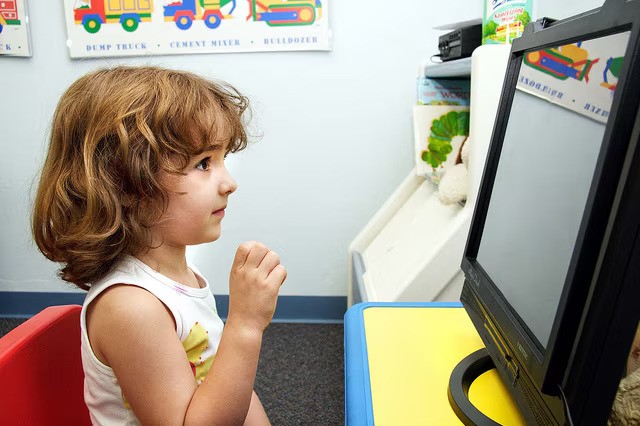
I used to swoop in the moment my child hesitated. It came from love that instinct to protect, to rescue. But each time I jumped in, I unknowingly stole her chance to think. That pause, that silence I rushed to fill, was actually the sound of her brain working. It’s in that quiet space that persistence and problem-solving start to grow. When I solved things for her too soon, I robbed her of the satisfaction of figuring it out herself.
Count silently to ten before you say a word. Let your child wrestle with the question. That “productive struggle,” the effort before success, is where the real learning happens. It builds patience, confidence, and the belief that they can find their own answers, even when it’s hard.
Check Out: How To Keep Kids Busy Without Screens
20. Not Knowing When To Ask For Help
You want to be there for your child, to fix every struggle and fill every gap. But sometimes, love turns into overhelping. You keep explaining, re-explaining, trying new tricks and still the same blank stare looks back at you. That’s not failure; it’s a sign your child might need support beyond what you can give.
Teachers, tutors, or math specialists aren’t replacements for you they’re partners in your child’s learning. When frustration outweighs progress, when math anxiety starts creeping in, or when every session ends in tears, it’s time to reach out. Getting help early doesn’t mean your child is “bad at math.” It means you’re smart enough to notice when it’s time to bring in another voice one that can restore confidence and clarity.
People Also Ask
What Is The Most Common Math Mistake?
One of the most frequent mistakes in math is misinterpreting the problem. Students often rush through questions without fully understanding what is being asked, leading to incorrect calculations and answers.
How Can I Help My Child Without Doing Their Math For Them?
Your goal shifts from “making them get it right” to “helping them think through it.” Instead of giving answers, ask guiding questions like:
- “What do you think this problem is asking?”
- “What could you try first?”
- “Let’s look at what you did and see what you notice.”
Giving them space to explore, struggle, and figure things out builds stronger mathematical thinking and confidence.
How Can I Make Math Practice More Engaging At Home?
Connect math to your child's interests and everyday experiences. Love sports? Calculate batting averages and statistics. Into video games? Discuss probability and strategy. Enjoy cooking? Double recipes and adjust measurements. Play math-based games, use educational technology strategically, create friendly competitions, and emphasize the usefulness of math in daily life.
Final Thought
When I changed how I helped my daughter, everything shifted. Math stopped feeling like a battle and became a conversation. We started celebrating effort instead of perfection, progress instead of pressure.
Now, when she gets stuck, she smiles and says, “Let’s figure it out.” That’s the real victory, not just mastering math, but learning how to learn.
If this story helped you, pass it on to another parent. Someone out there is sitting at their own kitchen table tonight, trying to turn frustration into understanding just like we once did.